Why Are You Anxious, My Soul?
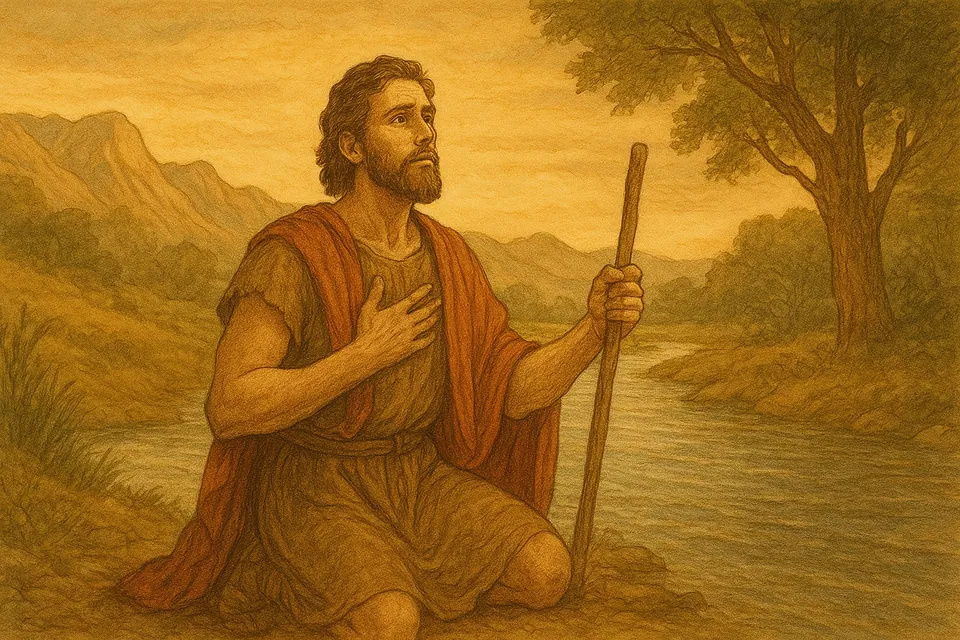
Psalm 42:1–11 (ESV)
- As a deer pants for flowing streams, so pants my soul for you, O God.
- My soul thirsts for God, for the living God. When shall I come and appear before God?
- My tears have been my food day and night, while they say to me all the day long, “Where is your God?”
- These things I remember, as I pour out my soul: how I would go with the throng and lead them in procession to the house of God with glad shouts and songs of praise, a multitude keeping festival.
- Why are you cast down, O my soul, and why are you in turmoil within me? Hope in God; for I shall again praise him, my salvation and my God.
- My soul is cast down within me; therefore I remember you from the land of Jordan and of Hermon, from Mount Mizar.
- Deep calls to deep at the roar of your waterfalls; all your breakers and your waves have gone over me.
- By day the LORD commands his steadfast love, and at night his song is with me, a prayer to the God of my life.
- I say to God, “My rock, why have you forgotten me? Why do I go mourning because of the oppression of the enemy?”
- As with a deadly wound in my bones, my adversaries taunt me, while they say to me all the day long, “Where is your God?”
- Why are you cast down, O my soul, and why are you in turmoil within me? Hope in God; for I shall again praise him, my salvation and my God.
📖 The Reality of Depression
Nowadays, anxiety and depression are very common. This is not limited to certain people—anyone can experience it. Even churchgoers who pray and serve are not exempt; in fact, those with greater responsibility may be more prone to emotional exhaustion. While society often frames depression as a social or medical issue, the Bible views it through the lens of our relationship with God. Inner emptiness and disconnection often manifest as spiritual thirst.
📖 Biblical Examples
Even great figures of faith in the Bible experienced despair and depression:
- Elijah: After his great victory on Mount Carmel, he fled from Jezebel’s threats and wished to die in the wilderness.
- Jonah: When he saw the repentance of Nineveh, he fell into despair and anger.
- John the Baptist: Experienced doubts and struggles while imprisoned.
These examples remind us that acknowledging our weakness is not shameful. Being honest before God is the beginning of restoration.
📖 The Psalmist’s Self-Reflection
The psalmist in Psalm 42 confesses: “As the deer pants for streams of water, so my soul pants for you, my God.”

This is not mere sadness but a profound state of spiritual thirst. He also suffers from the ridicule and taunts of others, experiencing deep discouragement and anxiety. Importantly, he does not remain trapped in his emotions but questions himself.
“Why, my soul, are you downcast? Why so disturbed within me?”
Through self-reflection, he examines the root of his emotions and shifts his focus from the problem to God. This inward dialogue itself is a step toward restoration.
📖 Placing Hope in God
Ultimately, the psalmist tells himself, “Put your hope in God.”
Emotions can distort reality, but God is the unchanging rock who fills the thirsty soul. Just as Elijah heard God’s “gentle whisper” amid despair, we too can experience God’s presence in moments of hopelessness. As Paul relied solely on “the God who raises the dead” during trials, our ultimate hope rests in God alone. He has saved us before, saves us now, and will continue to do so.
📖 Restoration and Application
Depression and discouragement may be inevitable at times. Yet the key to restoration is not remaining stuck in these feelings but turning our focus to God through self-reflection. God is Emmanuel—always with us—so even in discouragement, we have reason to praise and hope.
Brief Reflection Questions
- What is my soul truly longing for right now?
- Am I choosing isolation, or can I share this feeling with someone?
- What is one practical step I can take today to place my hope in God?
💡 Scripture Reflection Q&A
1. What is the psalmist’s emotional state, and what can we learn from it? (Psalm 42:1-2)
The psalmist experiences a parched and desperate soul, a sense of disconnection from God, and isolation from the community, accompanied by deep discouragement and anxiety. This shows that even believers are not free from depression, and spiritual thirst is a fundamental human need.
2. Why does the psalmist feel spiritually depressed and anxious? (Psalm 42:4,6)
He has lost the joy of past worship and the experience of God’s presence. The contrast between past grace and present emptiness intensifies his sense of loss. Being far from Jerusalem (the sanctuary) also symbolizes spiritual alienation.
3. What is the purpose of the mockery by those asking, “Where is your God?” (Psalm 42:3)
Their aim is to weaken the psalmist’s faith and cause him to doubt God’s protection and presence. The taunts act as external pressure, deepening his inner wounds.
4. How does the psalmist overcome his depression and anxiety?
He does not hide his emotions but confronts them, asking his own soul questions. By turning his attention to God and encouraging himself with “Put your hope in God,” he shifts focus from himself to God. This inward dialogue and God-centered approach become his path to escape.
5. What does the psalmist experience by placing hope in God? (Psalm 42:5,11)
He regains awareness that God is his rock and salvation, restoring praise and hope. While circumstances may not immediately change, faith in God brings inner peace and renewal.