The Lord is My Shepherd
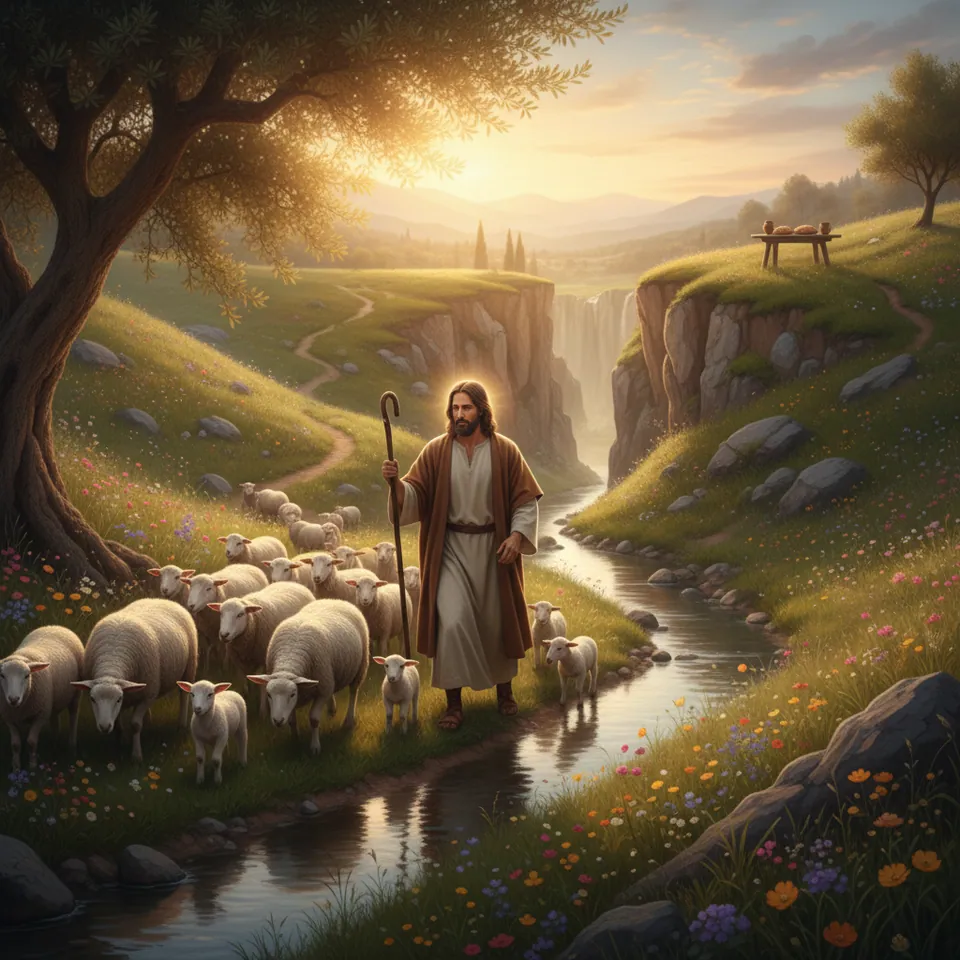
1 The Lord is my shepherd; I shall not want.
2 He makes me lie down in green pastures. He leads me beside still waters.
3 He restores my soul. He leads me in paths of righteousness for his name’s sake.
4 Even though I walk through the valley of the shadow of death, I will fear no evil, for you are with me; your rod and your staff, they comfort me.
5 You prepare a table before me in the presence of my enemies; you anoint my head with oil; my cup overflows.
6 Surely goodness and mercy shall follow me all the days of my life, and I shall dwell in the house of the Lord forever.

📖 Life’s Guidebook: Psalm 23
Psalm 23 brings deep comfort and hope in every season of life—whether joyful or sorrowful, peaceful or fearful. From birth to death and into eternity, it serves as a perfect guidebook for our journey. This beautiful psalm comforts us with the imagery of the Good Shepherd’s care and the King’s banquet table.
📖 Springtime of Life: Remembering All Is a Gift
Green pastures and still waters symbolize seasons of abundance and peace. Yet these moments can be spiritually dangerous, tempting us to believe our success is self-made. Sheep cannot create pastures; they survive only by following the shepherd. Likewise, our health, talents, and peace are gifts from God. The Good Shepherd leads us into maturity, guarding us from pride.
📖 Valley of Death: Experiencing Presence and Protection
To feed the sheep better, the shepherd sometimes leads them through dark valleys. Illness, broken relationships, or failure can feel terrifying. Yet these valleys are where we most deeply experience God’s presence and protection. In green pastures we know His provision; in valleys we learn His rod and staff bring comfort. Trust is forged not in books but in personal trials, and the faith community becomes vital in sharing burdens.
📖 In the Presence of Enemies: Becoming the King’s Guest
After the valley, the imagery shifts from shepherd and sheep to king and honored guest. God prepares a banquet before our enemies, anointing us with oil and filling our cup to overflowing. This is the place of eternal rest and glory, where we are safe and exalted.
📖 Relentless Pursuit: Goodness and Mercy That Never Let Go
The phrase “shall follow me” in verse 6 comes from the Hebrew radaph (רָדַף), meaning “to pursue.” Normally used for enemies chasing in battle, here it describes God’s goodness and mercy. Even when we stray, His love relentlessly pursues us until we are restored.
📖 Fulfillment of the Gospel: The Good Shepherd Bore the Curse
We do not deserve such blessing. Jesus, the Good Shepherd, bore the curse in our place. Psalm 22 foretells His suffering on the cross—thirst, broken bones, and abandonment. Because He endured what we deserved, we now enjoy the blessings of Psalm 23. The risen Christ prepares the heavenly banquet and remains with us until the end.
✨ Conclusion: The Shepherd Is Always With Us
Whether in green pastures or dark valleys, the Shepherd’s presence makes all the difference. Ultimately, He will welcome us into the eternal banquet of joy. Even when we fall into sin and run away, His relentless love pursues us and restores us.
📖 Audio Summary

💡 Reflection Q&A
Q1. Why is Psalm 23 loved by all?
A1. Because it offers comfort and hope in every stage of life—birth, marriage, suffering, and death—serving as a guidebook for the whole journey.
Q2. What spiritual danger lurks in life’s “springtime”?
A2. Believing health, success, and peace are self-earned, forgetting they are gifts from the Shepherd.
Q3. Why does the Shepherd lead sheep through the valley of death?
A3. To bring them to richer pasture and to teach them His protection and presence.
Q4. How does the imagery shift in verse 5?
A4. From shepherd and sheep to king and guest, showing exaltation and eternal rest after suffering.
Q5. What is the special meaning of “radaph” in verse 6?
A5. It means “to pursue,” showing God’s goodness and mercy relentlessly chase us to bless us.
Q6. Why can we receive Psalm 23’s blessings?
A6. Because Jesus bore the curse of Psalm 22—thirst, pain, and abandonment—on the cross.
Q7. How do blessings differ between pasture and valley?
A7. In pastures we experience provision; in valleys we experience protection and presence.
Q8. How is deep trust formed?
A8. Not through knowledge alone, but through personal trials where we rely only on God.
Q9. How are Psalms 22 and 23 connected?
A9. Psalm 22 shows the Messiah’s suffering; Psalm 23 shows the blessings believers enjoy because of that sacrifice.
Q10. What ultimate hope should we hold?
A10. That the Good Shepherd is always with us and will welcome us into His eternal banquet of joy.