The Christian Who ‘Wastes’ for Christ
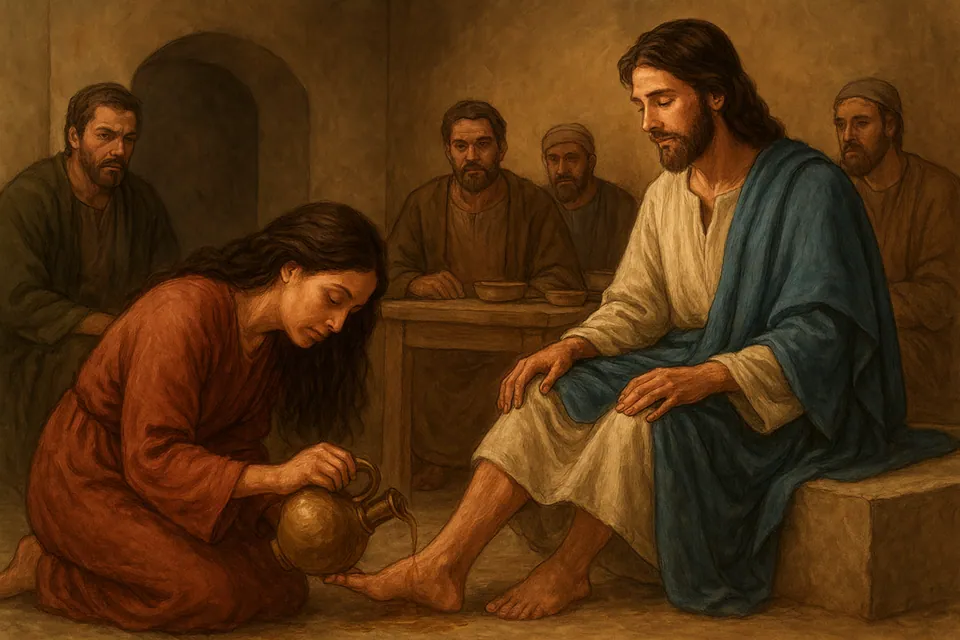
John 12:1–19
1 Six days before the Passover, Jesus arrived at Bethany, where Lazarus lived, whom Jesus had raised from the dead.
2 Here a dinner was given in Jesus’ honor. Martha served, while Lazarus was among those reclining at the table with him.
3 Then Mary took about a pint of pure nard, an expensive perfume; she poured it on Jesus’ feet and wiped his feet with her hair. And the house was filled with the fragrance of the perfume.
4 But one of his disciples, Judas Iscariot, who was later to betray him, objected,
5 “Why wasn’t this perfume sold and the money given to the poor? It was worth a year’s wages.”
6 He did not say this because he cared about the poor but because he was a thief; as keeper of the money bag, he used to help himself to what was put into it.
7 “Leave her alone,” Jesus replied. “It was intended that she should save this perfume for the day of my burial.”
8 “You will always have the poor among you, but you will not always have me.”
📖 Jesus Who Raised the Dead — Two Very Different Responses
John 12 marks a significant turning point.
Jesus’ public ministry is ending, and the shadow of the cross approaches.
The resurrection of Lazarus in chapter 11 caused a massive stir.
Some responded with deeper faith,
while the Pharisees and chief priests made plans to kill Jesus.
The same miracle produced two opposite responses:
- Some grew stronger in faith
- Others hardened in unbelief and hostility
In Bethany, a banquet was prepared to honor Jesus.
Lazarus sat with Him,
Martha served,
and Mary offered one of the most astonishing acts of devotion in Scripture.
📖 Mary’s Perfume — Worship That Gives Everything
Mary brought a pound of pure nard,
worth 300 denarii—about one year’s wages.
She did not offer a portion of it.
She poured all of it on Jesus’ feet
and wiped His feet with her hair.
A woman’s hair was her honor and dignity.
Mary laid even that at the feet of Jesus—
a striking act of self-abandonment and adoration.
What is worship?
Worship is acknowledging Christ as supreme
and giving Him our very best.
Mary’s alabaster jar represented the most precious thing in her life.
When she broke it,
her gaze shifted from her treasure
to Christ Himself.
Worship is this movement of the heart:
from “mine” to “His.”
📖 Judas Iscariot — A Faith Trapped in Calculation
Yet Judas sharply criticized Mary.
“Why wasn’t this perfume sold and the money given to the poor?” (v. 5)
His words sounded noble,
but his heart was far from compassion.
Scripture exposes him plainly:
“He was a thief.” (v. 6)
Judas:
- valued efficiency over devotion
- measured everything by profit
- called Mary’s sacrifice “waste”
Ironically, Judas later sold Jesus for
thirty pieces of silver—about 120 denarii,
far less than Mary’s offering.
A heart captured by money cannot see the worth of Christ.
📖 Jesus Defends Mary’s “Holy Waste”
Jesus silenced Judas:
“Leave her alone.
It was intended that she should save this perfume for the day of my burial.” (v. 7)
Mary sensed what was coming.
She understood Jesus’ heart
while the other disciples remained unaware.
Why did she see what others missed?
Because Mary was always at Jesus’ feet—
listening, learning, loving.
Love sharpens discernment.
Love recognizes the right moment.
Mary perceived the kairos moment
and responded with wholehearted devotion.
📖 The Cross — God’s Own “Holy Waste”
The world demands efficiency and logic.
But the gospel is not built on efficiency—it is built on love.
From a human perspective,
the cross is the greatest “waste” in history.
Why would God
give His one and only Son
for sinners?
Yet this “waste”
is the most holy, beautiful, and saving act of all time.
God poured out His everything
to redeem us.
Mary’s perfume points forward
to the extravagant love of the cross.
📖 Jim Elliot — A Life of Holy Waste
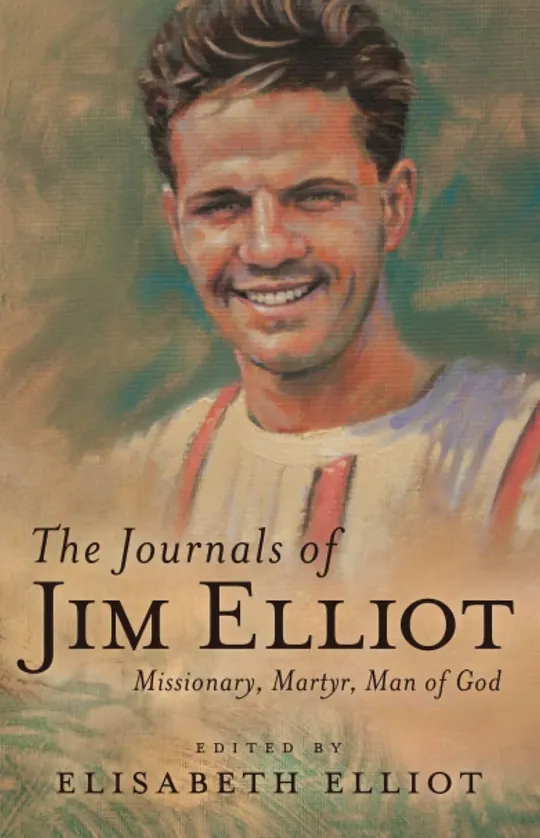
Missionary Jim Elliot,
serving the Auca tribe in Ecuador,
was killed just five days after arriving.
Reporters called it foolish—
a tragic waste of young lives.
His wife, Elisabeth Elliot, responded:
“A waste?
He was prepared for that moment his entire life.”
At 19 years old, Jim Elliot wrote:
“He is no fool who gives what he cannot keep
to gain what he cannot lose.”
The world saw loss.
Heaven saw eternal fruit.
📖 The Christian Life — A Life of Holy Waste
The world pours endlessly into itself
yet remains empty.
But Christians are people who
pour themselves out for Christ.
We “waste” for Christ through:
- time offered to Him
- resources given for His kingdom
- tears shed for souls
- a life surrendered to His calling
What the world labels “inefficient,”
God calls a fragrant offering.
Jesus said in Mark 14:9:
“Wherever the gospel is preached
throughout the world,
what she has done will also be told.”
And 2,000 years later,
we still remember Mary.
💡 Reflection Q&A
Q1. Why was Mary’s perfume so special?
A1. It represented her everything—an offering of absolute devotion to Christ.
Q2. Why was Judas’ criticism wrong?
A2. His words were practical, but his heart was attached to money, not God.
Q3. Why did Jesus affirm Mary’s act?
A3. She sensed the coming cross and offered her love in its perfect moment.
Q4. What is “holy waste”?
A4. It is devotion that looks excessive to the world but is precious to God.
Q5. What alabaster jar must I break?
A5. Success, money, children, ego—anything placed above God must be surrendered.