Love Grows
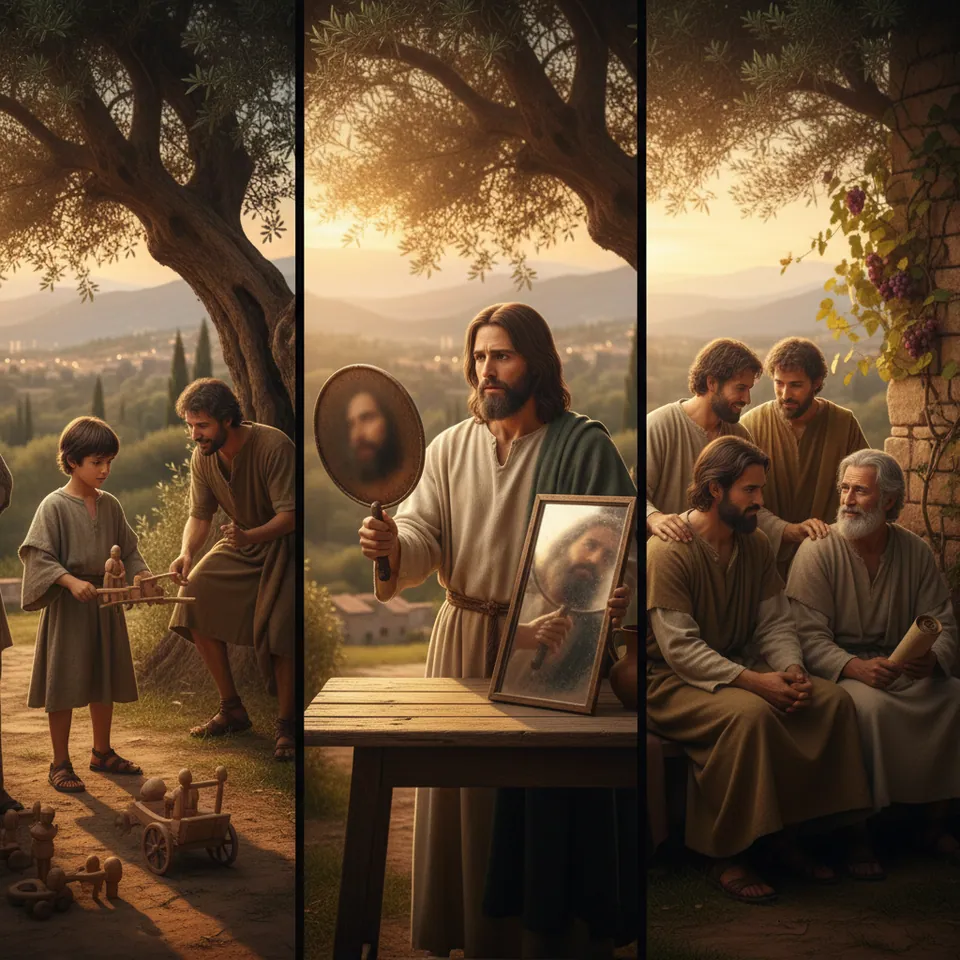
11 When I was a child, I spoke like a child, I thought like a child, I reasoned like a child. When I became a man, I gave up childish ways.
12 For now we see in a mirror dimly, but then face to face. Now I know in part; then I shall know fully, even as I have been fully known.
13 So now faith, hope, and love abide, these three; but the greatest of these is love.
📖 Without Care, Everything Withers
Every being in the world deteriorates without care. A beautiful flower quickly fades if neglected, and even a strong building requires constant maintenance. Running a small shop consumes enormous energy, and human relationships are no different.
Friendship or family bonds demand great cost. Occasional contact cannot deepen relationships; instead, they drift apart. As Jeremiah 1:10 describes the immense effort needed to build a nation, so too relationships require devoted effort to be built and sustained.
📖 Families Lost in Busyness
Many families today face crisis. One of modern society’s greatest features—busyness—erodes relationships. Materialism and consumerism drive us to earn and consume endlessly. Human desire, never satisfied, pushes us into restless lives.
As Byung-Chul Han’s The Burnout Society explains, modern people exploit themselves and fall into fatigue, drifting toward individualism. Walter Brueggemann, in Sabbath as Resistance, urges us to resist this culture. Only when we dare to say “enough” can rest and restoration come, and broken family ties be healed.


📖 Maturity in Love: Putting Away Childish Things
Paul teaches in 1 Corinthians 13:11 that maturity in love requires putting away childish things. A child lives in a self-centered world, thinking only of themselves.
Marriage and love are shared relationships. If one focuses only on personal desires and ignores the needs of the other, happiness cannot be found. Using another as a tool for one’s own comfort is not love. The rise of single households and negative views of marriage today reflect a culture that values personal comfort over the maturity of giving oneself for another.
📖 Marriage: Covenant and Mysterious Union
Scripture warns against allowing evil cracks to destroy marriage (1 Corinthians 7:5). Marriage is not simply living together but a mysterious union established by God. Ecclesiastes 9:9 teaches that living joyfully with a beloved spouse is one of life’s greatest blessings.
Faith is relationship. To move beyond childish self-centeredness, we must respect and adapt to the other’s preferences. True Christian love is found in serving others, not seeking our own benefit, and in the joy reflected back when we give ourselves (Philippians 2:3-4).
📖 Building a Covenant Community Through the Cross
Another name for love is “waiting.” Just as Jacob patiently served seven years for Rachel, true love includes patience. Rather than insisting on our rights, we must overcome selfishness through the faith of the cross. As Christ gave His life for us, we too must lay down ourselves for love.
Marriage is not a contract but a covenant. Contracts break when conditions fail, but covenants endure with God’s faithfulness. A home without faithfulness is fragile. True joy comes when we make the other happy.
✨ Conclusion: The Mission of Building Healthy Families
Through the cross of Christ, we learn unconditional love. The two communities God established—family and church—are both our mission and our grace. Family restoration is not only personal happiness but also the realization of God’s reign on earth.
As we are continually trained in God’s grace, we can share perfect love with our spouse and neighbors. Love is not static; it grows like a living being when we put away childish ways and move toward maturity.
📖 Audio Summary of the Message

💡 Reflection Q&A
Q1. What is most necessary to sustain human relationships?
A1. Just like everything else, relationships require great energy and devoted care to be preserved.
Q2. How does modern busyness affect families?
A2. Materialistic desires steal time from families, leaving relationships broken.
Q3. What does Sabbath as Resistance emphasize?
A3. It teaches that resisting the culture of busyness by saying “enough” brings true rest and restored relationships.
Q4. What does “childish things” mean in love?
A4. It refers to selfish attitudes focused only on one’s own benefit.
Q5. What does “instrumentalizing” a spouse mean?
A5. It means using the other for one’s own comfort instead of caring for their needs.
Q6. What maturity is needed when faith is defined as relationship?
A6. The maturity of serving, respecting, and adapting to the other rather than insisting on one’s own way.
Q7. What is the essence of marriage according to Scripture?
A7. It is a divine mystery, a covenant of joy and blessing, not merely human effort.
Q8. What feature of love is shown in Jacob’s story?
A8. Love includes patience and the willingness to wait long for the beloved.
Q9. What is the difference between contract and covenant in marriage?
A9. Contracts depend on conditions, but covenants endure with God’s faithfulness.
Q10. Why must we build healthy families?
A10. Family restoration is God’s mission, the core place to practice the love of the cross.