Life, and Life Abundantly
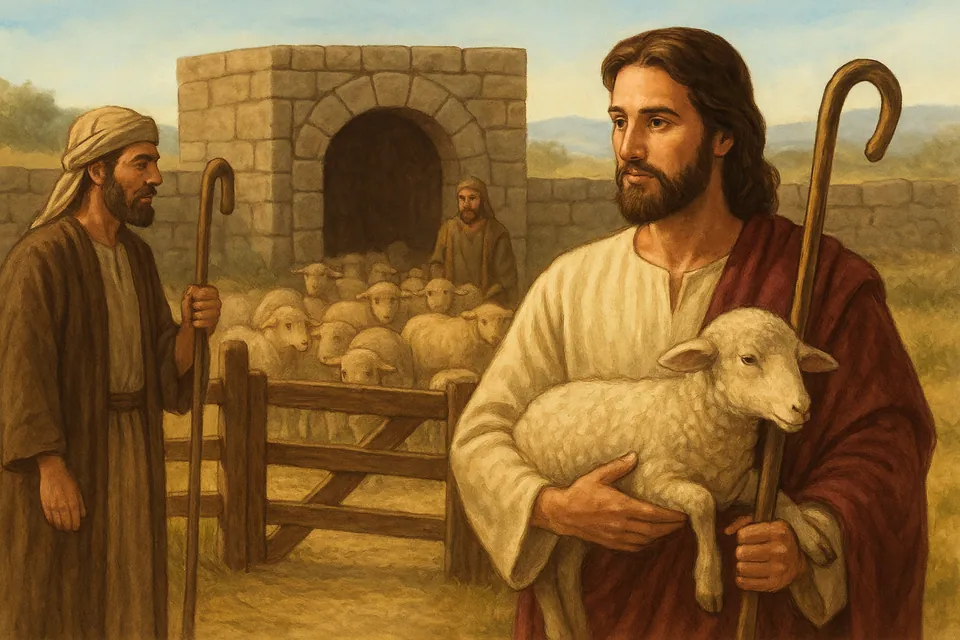
John 10:1-12
1 “Very truly I tell you Pharisees, anyone who does not enter the sheep pen by the gate, but climbs in by some other way, is a thief and a robber.
2 The one who enters by the gate is the shepherd of the sheep.
3 The gatekeeper opens the gate for him, and the sheep listen to his voice. He calls his own sheep by name and leads them out.
4 When he has brought out all his own, he goes on ahead of them, and his sheep follow him because they know his voice.
5 But they will never follow a stranger; in fact, they will run away from him because they do not recognize a stranger’s voice.”
6 Jesus used this figure of speech, but the Pharisees did not understand what he was telling them.
7 Therefore Jesus said again, “Very truly I tell you, I am the gate for the sheep.
8 All who have come before me are thieves and robbers, but the sheep have not listened to them.
9 I am the gate; whoever enters through me will be saved. They will come in and go out, and find pasture.
10 The thief comes only to steal and kill and destroy; I have come that they may have life, and have it to the full.
11 “I am the good shepherd. The good shepherd lays down his life for the sheep.
12 The hired hand is not the shepherd and does not own the sheep. So when he sees the wolf coming, he abandons the sheep and runs away. Then the wolf attacks the flock and scatters it.”
📖 Jesus, the True Shepherd
John 9 ends with Jesus exposing the spiritual blindness of the Pharisees.
John 10 opens by directing our attention to one central figure:
Jesus Christ, the True and Good Shepherd.
Scripture describes the relationship between God and His people through various metaphors:
- Father and son
- Bridegroom and bride
- Vine and branches
- Shepherd and sheep
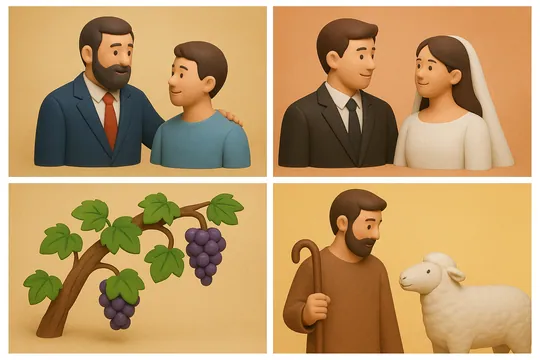
Each of these highlights an unbreakable covenant relationship.
Among them, “shepherd and sheep” was especially familiar to Israel’s pastoral culture.
Where there is a shepherd, there are sheep.
And where there are sheep, there must be a shepherd.
This is the very picture of God and His people.
📖 The Nature of Sheep — and the Nature of Humanity
Phillip Keller, a shepherd and pastor, wrote that sheep mirror human nature.
Sheep show us our spiritual condition.
- They cannot defend themselves
- They easily lose their way
- Even with good pasture nearby, they wander elsewhere
- They are fearful and stubborn
- They cannot survive without a shepherd
We are the same.
Away from the Shepherd, we inevitably lose our way and fall into danger.
📖 The Hired Hand and the Thief — False Shepherds Exposed
The Hired Hand
- The sheep do not belong to him
- He avoids anything that costs him
- When danger comes, he runs
- He uses the sheep for his benefit
The Thief
- Seeks to steal, kill, and destroy
- Represents the Pharisees and teachers of the law
- They looked like shepherds but devoured the flock
Jesus condemned them plainly:
They carried religious authority but did not lead souls to God.
📖 The Good Shepherd — The One Who Lays Down His Life
“I am the good shepherd. The good shepherd lays down his life for the sheep.” (John 10:11)
“Good” does not merely mean kind.
It means true, authentic, perfect Shepherd.
- Jesus protects His sheep by offering His own life
- The cross is the ultimate proof of the Shepherd’s love
- He calls His sheep by name
- He knows everything about us—
our past, our pain, our weaknesses—yet never abandons us
Where people leave when they see weakness,
God embraces us deeper.
📖 Sheep Follow the Voice of the Shepherd
Sheep have poor eyesight—but highly developed hearing.
God created them this way intentionally.
True sheep recognize and respond to the Shepherd’s voice.
- Through sermons
- Through Scripture meditation
- Through the faith community
- Through circumstances
- Through the illumination of the Holy Spirit
When the Shepherd speaks, the heart reacts and obeys.
If the Word of God touches your heart, you are His sheep.
If it never moves you, you may not be.
The Pharisees heard Jesus but understood nothing—
because they were not His.
📖 Life to the Full — The Shepherd’s Purpose
Jesus reveals why He came:
“I have come that they may have life, and have it abundantly.” (John 10:10)
This life is not mere survival.
It is:
- Eternal life,
- Life freed from the power of sin and death,
- The life of God Himself within us
John 20:31 explains the purpose of the Gospel:
“…that by believing you may have life in His name.”
Abundant life means:
- Inner fulfillment
- Peace and joy not tied to circumstances
- Overflowing grace
- Strength to endure suffering
- The ability to love and share generously
Zacchaeus gave freely because
abundant life had entered his heart.
📖 The Shepherd Who Never Gives Up
Psalm 23:6 reveals a stunning truth:
“Surely Your goodness and love will follow me…”
We follow the Shepherd,
but His goodness and love are actually pursuing us.
John 10:28–29 strengthens this promise:
“No one will snatch them out of My hand.”
We wander, stumble, and drift—
but the Shepherd finds us and brings us back.
📖 Conclusion — What the Sheep Must Do
Sheep do not need skill.
Only one thing:
Stay near the Shepherd and follow His voice.
Even when the Word challenges us,
obedience is the mark of true discipleship.
The success of the sheep is not ability,
but simply following the Shepherd.
The Good Shepherd leads us to green pastures every day.
💡 Reflection Q&A
Q1. Why did Jesus call Himself “the gate for the sheep”?
A1. Because only through Him can we receive salvation, protection, and true pasture.
Q2. How are sheep like us spiritually?
A2. Sheep are weak, easily lost, and stubborn. We too cannot survive without the Shepherd.
Q3. Who are the “hired hand” and “thief”?
A3. The hired hand is one who uses the flock; the thief destroys it. They represent false leaders like the Pharisees.
Q4. How do we know if we are the Lord’s sheep?
A4. We respond to the Shepherd’s voice. The Word touches and guides our hearts.
Q5. What is the “abundant life” Jesus promised?
A5. Not survival, but eternal, Spirit-filled, overflowing life—joy, peace, and strength that the world cannot give.