What Is Flying Away? Time, or Ourselves?
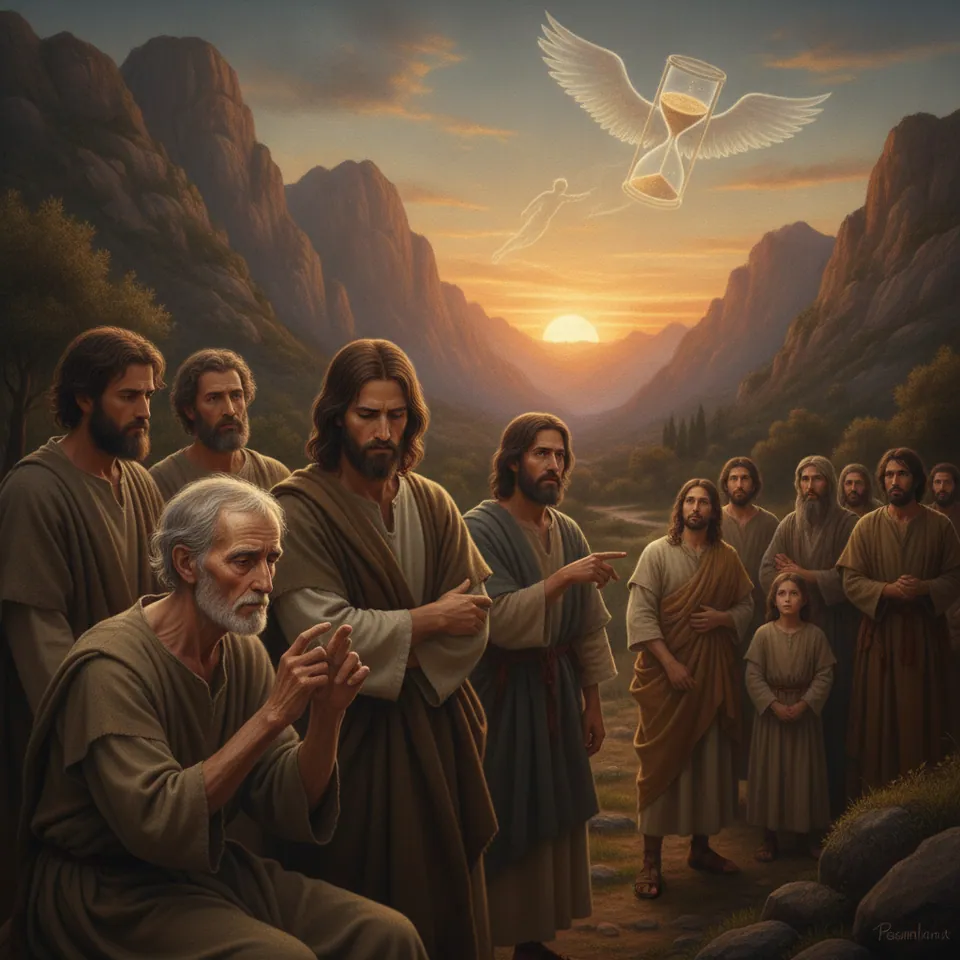
10 Our days may come to seventy years, or eighty, if our strength endures; yet the best of them are but trouble and sorrow, for they quickly pass, and we fly away.
11 If only we knew the power of your anger! Your wrath is as great as the fear that is your due.
12 Teach us to number our days, that we may gain a heart of wisdom.
📖 Psalm 90: Moving Beyond Time Management to Prayer
Psalm 90:10-12 is often cited in self-improvement books to support the logic that “life is short, so we must make the most of our time.” However, this passage is not merely a lamentation about aging or a guide to efficient time management. Psalm 90 captures a spiritual journey that begins with a lament, seeks wisdom, and ultimately leads to earnest prayer.
Beyond reflecting on time and age, this passage is about “prayer”—realizing who we are as human beings in the presence of God. A closer look at the text reveals that this is not the kind of time-management tip the world talks about.
📖 The True Meaning of “We Fly Away”
Scripture does not say that time flies; rather, it says, “we fly away.” This is a unique image used by Moses. It does not mean that we fly beautifully through the sky, but rather symbolizes the process of human existence itself rapidly fading and vanishing.
Although we all intellectually acknowledge our own mortality, we often live without truly accepting it in our hearts. Moses emphasizes that it is only when we “number our days” that we realize we are beings who fly away (fade away). Acknowledging this transience is the beginning of wisdom.
📖 The Wisdom of Counting Days, Not Years
People usually measure their lives in “years.” Years are often used to boast of one’s achievements or to calculate retirement pensions. When we view life in terms of years, it creates the illusion that we have plenty of time left, leading to complacency.
However, Scripture teaches us to number our “days.” In the Bible, a “day” is the basic unit of obedience. Just as God provided daily manna to the Israelites in the wilderness, faith is a matter of today. Jesus also called us to “take up [our] cross daily and follow [Him]” (Luke 9:23). When we measure our lives by days, we finally discover the weight of today and the true value of daily obedience.
📖 How to Live in the Present: The Direction of the Soul
We often cry out “Carpe Diem” (seize the day), but the truth is that the present is impossible to grasp. The future has not yet arrived, and the past is already gone. Augustine suggested that time should be understood not as a physical entity, but as an extension of the soul. The past is merely the “present of memory,” and the future is the “present of expectation.”

The only thing we can do in this fleeting present is pay “attention.” Carefully observing which direction our soul is facing right now is the only way for our transient lives to hold onto the present.
📖 Moses’ Prayer in the Face of Mortality
Moses explains the vanity of a transient life from four perspectives. First, from God’s perspective of time, a thousand years pass like yesterday. Second, humans ultimately return to dust, and all our achievements become dust as well. Third, life is as fleeting as a flower that blooms in the morning and fades in the evening. Fourth, while we try to use time as a hiding place to conceal ourselves, God exposes our secret sins before the light of His presence.
In the midst of this fading reality, Moses begins to pray. Knowing that we cannot live uprightly by our own strength, he reflects on his shortcomings every night and seeks God’s help.
✨ Conclusion: Finding Joy in the Midst of Transience
Life begins like a flower blooming in the morning, but ultimately withers and dries up by evening. This is an undeniable reality. Yet, without denying this truth, Moses prays to God to “make us glad all our days.”
His prayer is specific: “Make us glad for as many days as you have afflicted us, for as many years as we have seen trouble.” The only reason we, as transient beings, can experience true joy is that the eternal God intervenes in our short days. To those who number their days and keep their souls anchored in God, true joy that transcends the vanity of transience is granted.
📖 Listen to the Message

💡 Reflection Q&A
Q1. What is Psalm 90 primarily about?
A1. Rather than being a simple message about time management or self-improvement, it contains spiritual principles that lead through lament and wisdom into prayer.
Q2. What is the true meaning of the expression “we fly away”?
A2. Beyond the idea that time passes quickly, it signifies the existential vanity and limitation of human existence itself fading and disappearing.
Q3. Why does the Bible teach us to number our “days” rather than our “years”?
A3. While years are a unit of boasting and complacency, days are the basic unit of faith—seeking daily obedience and daily bread.
Q4. What is the relationship between the life of a disciple in Luke 9:23 and time?
A4. It teaches us that the life of a disciple is not about occasional resolutions, but the daily repetition of denying oneself and taking up the cross.
Q5. How did Augustine define time?
A5. He did not see time as a physical entity but as an “extension of the soul,” understanding the past and future in terms of present memory and expectation.
Q6. What is the most important thing we can do to live in the present?
A6. Rather than struggling to grasp the fleeting present, we should pay close attention to and observe the direction our soul is facing right now.
Q7. What are the four characteristics of the vanity of life mentioned by Moses?
A7. Life is short compared to God’s eternity, we return to dust, we wither like a flower, and our sins are fully exposed before God.
Q8. What does it mean to use time as a “hiding place”?
A8. It means that while people try to hide their sins within the passage of time, God exposes all those secret sins in the light of His presence.
Q9. What did Moses pray for in the face of our fading reality?
A9. He earnestly pleaded with God to grant His comfort and joy for as many days and years as they had suffered.
Q10. What is the quickest way to gain a heart of wisdom?
A10. It is to acknowledge our own transience, number our days in the light of God’s presence, and move forward in prayer.