Those Who Mourn

4 Blessed are those who mourn, for they will be comforted.
📖 The World’s Pleasure and Heaven’s Mourning
In the eight Beatitudes taught by Jesus, the first blessing is given to “the poor in spirit,” for theirs is the kingdom of heaven. Immediately following this is the blessing for “those who mourn.” This is a truly paradoxical teaching. Today’s world seems far removed from mourning. All media and culture tell us to pursue greater pleasure and greater happiness. Outwardly, the world always seems bright and cheerful.
However, Christianity is by no means a gloomy and dark religion. Jesus was a person full of wit and humor. Charlie Chaplin said, “Life is a tragedy when seen in close-up, but a comedy in long-shot.” When we look deeply into our lives, we realize there are many reasons to weep. What, then, is the blessed “mourning” that Jesus spoke of?
📖 Mourning: Facing the Reality of Sin
The mourning spoken of in the Bible is not simply sorrow over worldly sadness or personal misfortune. It is specifically “mourning for sin.” It refers to the deep sorrow that erupts when one realizes how terrible their sin is—its true reality. It is like how the bright sun reveals even the smallest, previously unseen blemish on my face. When we discover our own sinful existence before the holy light of God, we can finally lament and mourn.
📖 The Eichmann Within Us
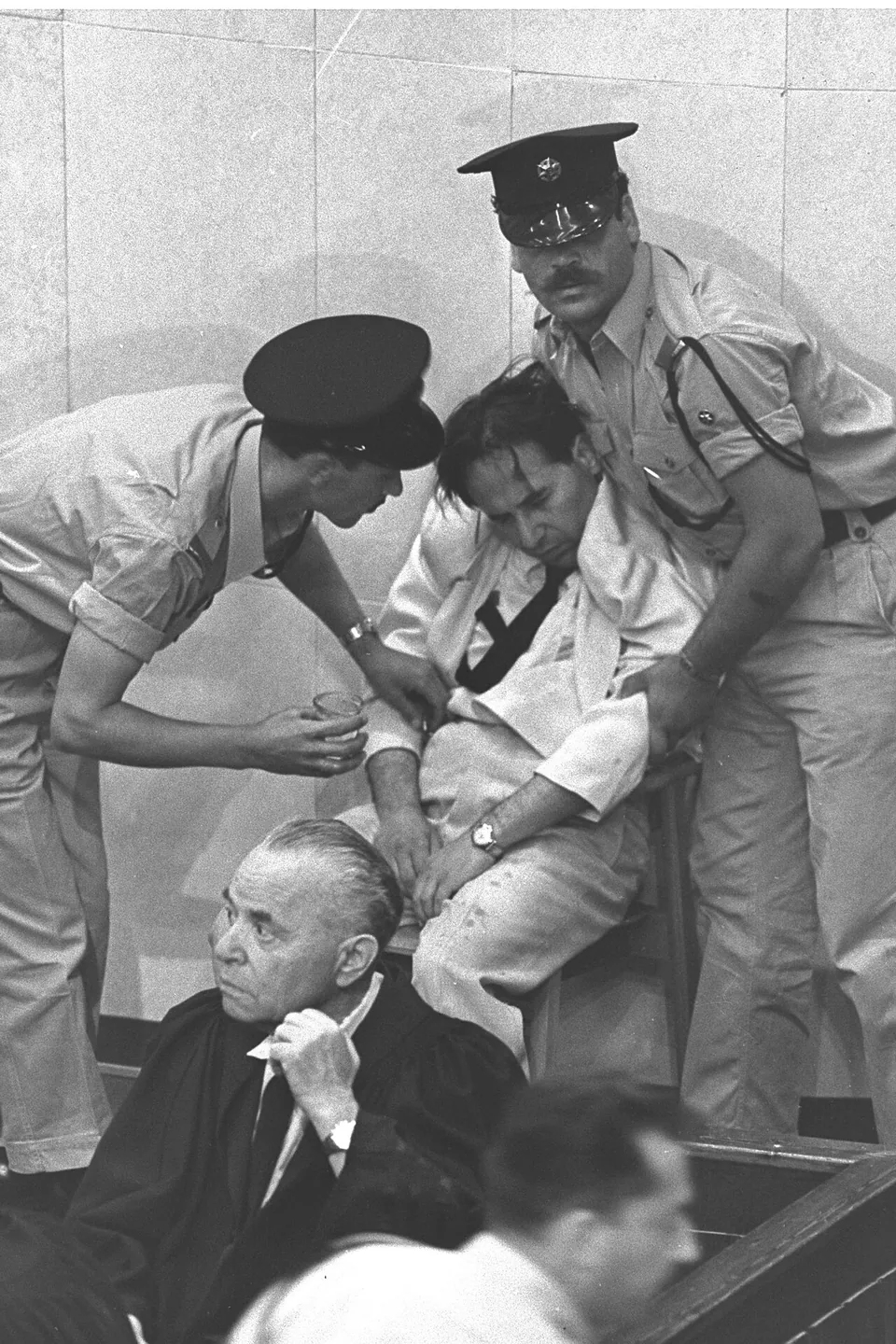
The story of Charles Colson, who went to prison for the Watergate scandal during the Nixon administration, converted, and became a prison missionary, offers us profound insight. He watched an interview video of Auschwitz survivor Yehiel De-Nur confronting Adolf Eichmann, the man responsible for the massacre, in a courtroom. Upon seeing Eichmann, De-Nur fainted on the spot.
People assumed he collapsed due to the horrible memories of the past. But De-Nur’s confession was shocking. He had imagined Eichmann to be a terrifying monster, but he was shocked to find that the man he faced was just an ordinary person. De-Nur confessed, “I was afraid of myself. Because I am the same as he is.” He realized that the evil seen in Eichmann does not belong only to a special monster but can exist within us as well. Confronting the sin within us is a shocking event, enough to completely shatter us.
📖 “You Are the Man!” - The Discovery of Hidden Sin
We often think we must hide our sins well to survive. But the truth of the Bible is the opposite: we can only live by exposing and confessing our sins. The bigger problem is that we live our lives without even properly recognizing our own sin.
King David is a prime example. At the peak of his power, victorious in battle after battle, he saw a woman bathing. She was Bathsheba, the wife of his most loyal soldier, Uriah. David slept with her and, to cover up his sin, sent Uriah to the fiercest part of the battlefield to be killed.
Later, the prophet Nathan came to David and told him a parable. A rich man with many sheep took a poor man’s only beloved ewe lamb to serve a guest. Hearing this, David became furious and shouted that the rich man deserved to die. He judged another’s sin with great severity while treating his own terrible sin very lightly. It was at that moment that Nathan the prophet cried out to David, “You are the man!” In that instant, David finally saw the reality of his sin and was utterly broken. It is the moment one realizes that all sin is ultimately committed before God.
📖 Without Mourning, There Is No Comfort
Before the people who were about to stone the woman caught in adultery, Jesus said, “Let any one of you who is without sin be the first to throw a stone at her.” This word makes us realize that we are all sinners who must first confront our own sin, not judges.
True spiritual revival happens when there is a heart that deeply mourns for one’s own sin. For a believer, the moment of greatest grace is the very moment when all their sins are completely exposed and forgiven before Christ. The Bible promises, “Whoever conceals their sins does not prosper, but the one who confesses and renounces them finds mercy” (Proverbs 28:13). The word for “mourn” here is the same one used to describe the gut-wrenching grief Jacob felt when he heard the news of his beloved son Joseph’s death.
📖 An Age of Dry Eyes, a Promised Comfort
We cannot say that we sin less than people of the past. But what is certain is that we live with far less mourning than they did. We live in a world accustomed to condemning and judging others rather than grieving over our own sin.
But the Lord makes a clear promise: those who mourn will be comforted. If we lack holy mourning for sin, other kinds of worldly sorrow will find us (Luke 6:25). We treat sin too lightly, without mourning.
Just as water can always flow from a faucet that isn’t broken, a healthy believer is someone who is always ready to shed tears over their sin. The deep mourning for sin, and the divine comfort that unfailingly follows, is an amazing privilege that only believers can enjoy.
📖 Audio Summary of the Message

💡 Reflection Q&A
Q1. Why does Jesus’ saying “Blessed are those who mourn” sound paradoxical?
A1. Because the world considers pursuing pleasure and avoiding sorrow as the highest value.
Q2. In the Bible, what specifically does “mourning” refer to?
A2. It refers not to worldly sorrow, but to the deep grief that comes from realizing the terrible reality of one’s own sin.
Q3. Why did the Auschwitz survivor De-Nur faint upon seeing the ordinary-looking Eichmann?
A3. He was shocked by the realization that the perpetrator of horrific evil was not a special monster, but an ordinary person just like himself.
Q4. Why must we expose our sins rather than hide them?
A4. The Bible teaches that those who hide their sins will not prosper, and only those who confess and forsake them can receive God’s mercy and truly live.
Q5. What lesson does the story of David and the prophet Nathan teach us?
A5. It shows that, like David, we are prone to hypocrisy—judging others’ sins harshly while being numb to our own.
Q6. What change occurred in David when Nathan declared, “You are the man!”?
A6. He was finally able to see the reality of his sin objectively and mourned with desperate repentance before God.
Q7. When is the moment of greatest grace for a believer?
A7. It is the moment when all their sins are fully exposed and they experience complete forgiveness at the cross of Christ.
Q8. What is the biggest problem regarding sin in our time?
A8. We have lost the heart of deep mourning for our own sin and instead have a tendency to quickly condemn and judge others.
Q9. What is God’s promise to those who mourn over their sin?
A9. The promise that they will surely receive God’s comfort.
Q10. Why is mourning for sin and the resulting comfort called a “privilege”?
A10. Because the very ability to recognize and grieve over one’s sin is a work of the Holy Spirit, and the heavenly comfort that follows is a grace the world cannot give, granted only to believers.