Surely He Took Up Our Infirmities
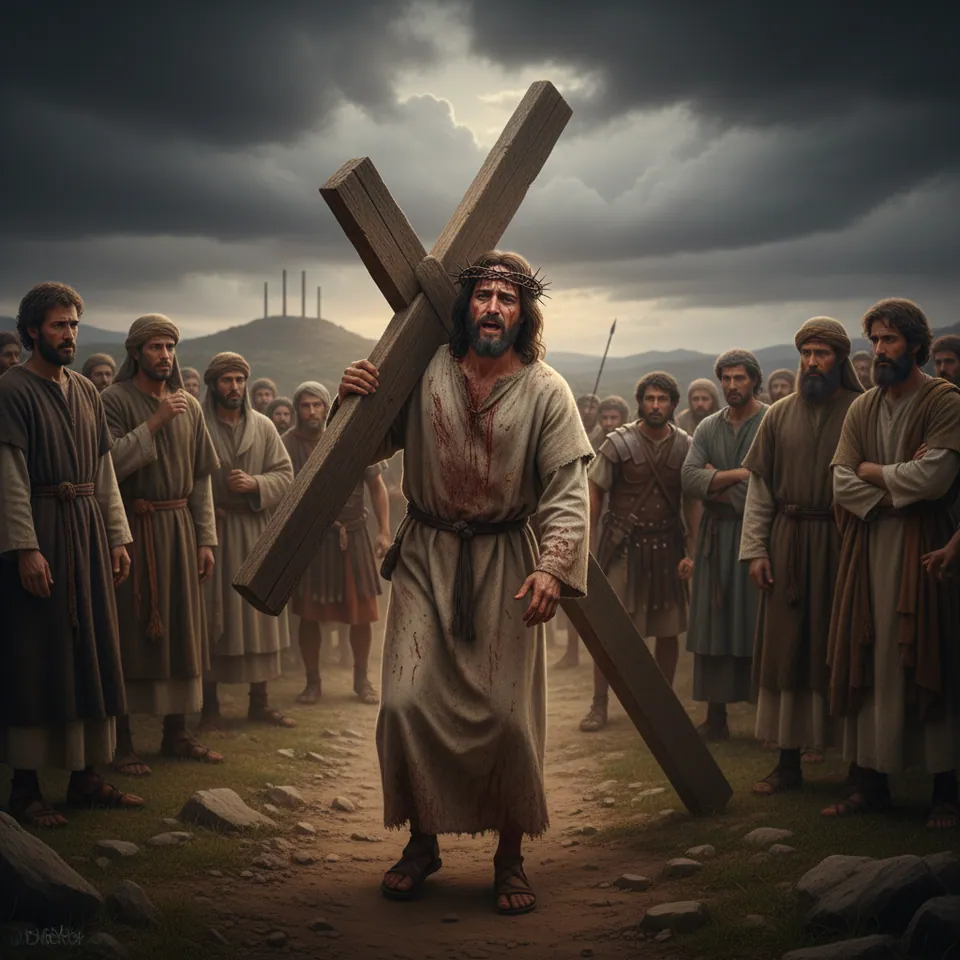
1 Who has believed our message and to whom has the arm of the Lord been revealed?
2 He grew up before him like a tender shoot, and like a root out of dry ground. He had no beauty or majesty to attract us to him, nothing in his appearance that we should desire him.
3 He was despised and rejected by mankind, a man of suffering, and familiar with pain. Like one from whom people hide their faces he was despised, and we held him in low esteem.
4 Surely he took up our pain and bore our suffering, yet we considered him punished by God, stricken by him, and afflicted.
5 But he was pierced for our transgressions, he was crushed for our iniquities; the punishment that brought us peace was on him, and by his wounds we are healed.
6 We all, like sheep, have gone astray, each of us has turned to our own way; and the Lord has laid on him the iniquity of us all.
7 He was oppressed and afflicted, yet he did not open his mouth; he was led like a lamb to the slaughter, and as a sheep before its shearers is silent, so he did not open his mouth.
📖 The Passion of Christ Painted Like a Picture
Isaiah 53 is known as the “Song of the Suffering Servant,” a treasure of Scripture. It is like a majestic painting that vividly portrays Christ’s coming and His suffering.
Yet sadly, few truly understand this message. Recognizing God as God and grasping His plan of salvation is not human wisdom but a gift of divine revelation.
📖 The Messiah We Expected, the Jesus We Rejected
When Christ came to earth, people did not believe Him. The reason was simple: He did not appear in the glorious form they expected.
Isaiah 53:2 records that “He had no beauty or majesty to attract us to him, nothing in his appearance that we should desire him.”
- A rejected king: Without visible glory or worldly authority, the people turned away.
- A God of our own making: The “victorious and successful God” we expect may in fact be an idol of our own imagination.
- A suffering servant: Jesus came not as a dazzling king but as a despised servant who bore suffering for us. (Isaiah 53:3)
📖 Substitution: Another Name for Love
People thought Jesus suffered on the cross because of His own sins. (Isaiah 53:4) But the truth was the opposite—He suffered because of ours.
The Bible calls this “substitution.” The cost of sin is too great for humans to bear. So God laid the iniquity of us all upon Him. (Isaiah 53:6)
The place where I should have died, Christ died instead. This “substitutionary death” is the very heart of the gospel.
📖 The Sacrifice God Himself Prepared
This principle of substitution echoes Genesis 22, when Abraham was about to sacrifice Isaac. As Abraham confessed, God Himself provides the lamb. (Genesis 22:8)
No matter what humans bring, it cannot satisfy the holiness of God. Only the sacrifice God Himself provides—the “Lamb of God”—can bring us to Him.
- Symbol of substitution: The ram caught in the thicket died in Isaac’s place. (Genesis 22:13)
- Not sparing His Son: God did not spare His own Son but gave Him up for us all. (Romans 8:32)
- Bearing our sins: He bore our sins in His body on the tree, so that we might die to sin and live to righteousness. (1 Peter 2:24)
📖 The Cross: The Upside-Down Power of Salvation
Christ went silently like a lamb to the slaughter. (Isaiah 53:7) To human eyes, the cross looked like the most miserable failure.
But God accomplished the greatest victory through what seemed utterly impossible.
The light of salvation broke forth paradoxically from the darkest moment—Christ’s death. The cross contains a “subversive power”: through death, Christ triumphed and gave us the gift of salvation.
✨ Conclusion: Living Before the Cross
The cross is not a mere ornament or religious symbol. It is God’s passionate love and irresistible grace.
When we truly grasp the meaning of the cross, our lives are transformed.
- We realize how grave our sin truly is.
- We understand God’s heart that never gives up on us.
- We stop striving to impress God with religious effort.
Our role is not to move God with our works, but to be moved by what He has already done. That love changes us and leads us into true peace.
📖 Audio Summary

💡 Reflection Q&A
Q1. Why did people fail to recognize the Messiah when He came?
A1. Because they expected a glorious, majestic figure, but Jesus came as a suffering servant with no outward beauty.
Q2. What does “substitution” mean in the gospel?
A2. It means God placed the responsibility for our sins upon Jesus Christ, who bore them in our place.
Q3. How were “peace” and “healing” in Isaiah 53:5 accomplished?
A3. By Christ bearing our punishment, we gained peace with God; by His wounds, our spiritual sickness was healed.
Q4. What is the common thread between Isaac’s near-sacrifice in Genesis 22 and the cross?
A4. In both, God Himself provided the sacrifice—first the ram, and ultimately the Lamb, Jesus Christ.
Q5. Why is the cross described as “subversive power”?
A5. Because what looked like utter defeat—death—became the greatest victory: salvation for humanity.
Q6. What is the first change when we truly understand the cross?
A6. We realize the depth and seriousness of our sin, which required the death of God’s Son to be resolved.
Q7. According to 1 Peter 2:24, what was the purpose of Christ’s suffering?
A7. That we might die to sin and live to righteousness.
Q8. Why don’t we need to strive to impress God?
A8. Because salvation is based not on our works but on what God has already accomplished. We simply respond in gratitude.
Q9. Why is Jesus compared to a lamb in Isaiah 53?
A9. To show His humility and obedience—He silently endured suffering and death in submission to God’s will.
Q10. What does it mean today to “make God into an idol”?
A10. Expecting only glory without suffering, or treating God as a tool to fulfill our desires, is idolatry.