There Is No Eternal Sandcastle
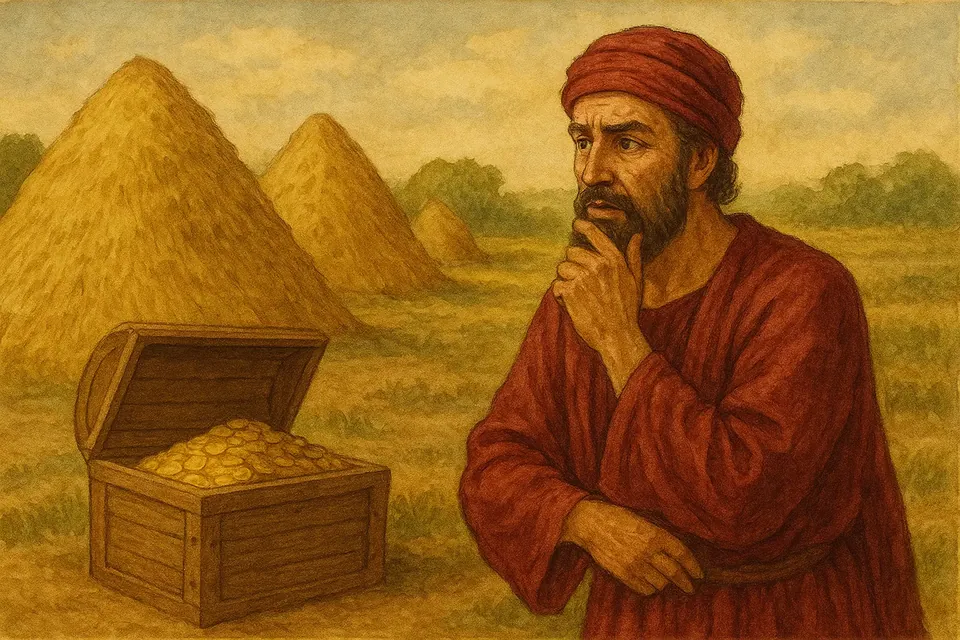
Luke 12:13–21
13 Someone in the crowd said to him, “Teacher, tell my brother to divide the inheritance with me.”
14 Jesus replied, “Man, who appointed me a judge or an arbiter between you?”
15 Then he said to them, “Watch out! Be on your guard against all kinds of greed; life does not consist in an abundance of possessions.”
16 And he told them this parable: “The ground of a certain rich man yielded an abundant harvest.
17 He thought to himself, ‘What shall I do? I have no place to store my crops.’
18 “Then he said, ‘This is what I’ll do. I will tear down my barns and build bigger ones, and there I will store my surplus grain.
19 And I’ll say to myself, “You have plenty of grain laid up for many years. Take life easy; eat, drink and be merry.”’
20 “But God said to him, ‘You fool! This very night your life will be demanded from you. Then who will get what you have prepared for yourself?’
21 “This is how it will be with whoever stores up things for themselves but is not rich toward God.”
📖 Sandcastles and Life
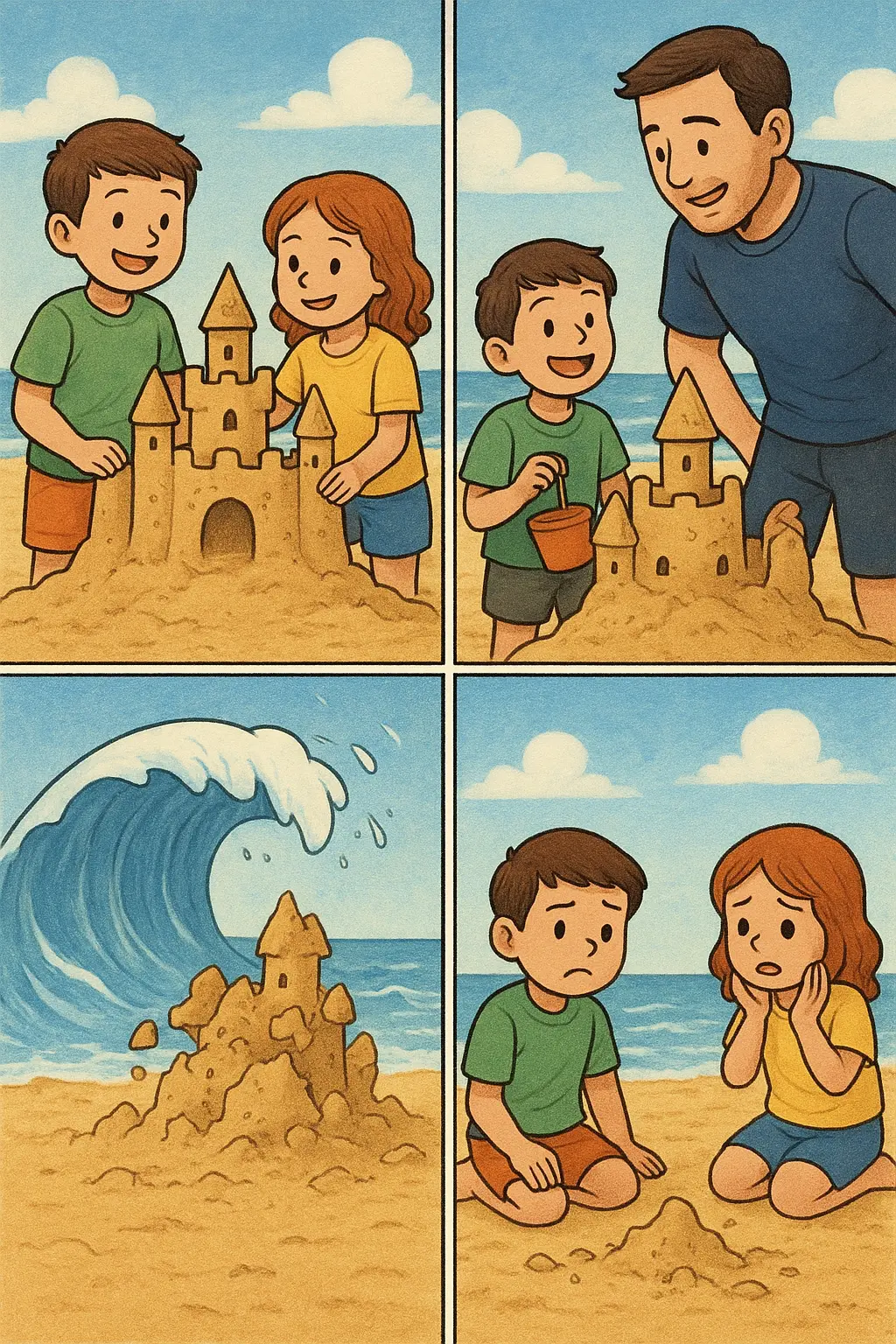
Children build sandcastles by the sea.
But one wave is enough to wash them away.
No matter how many times they rebuild, they eventually collapse.
Children quickly learn:
“Sandcastles are meant to fall.”
Our achievements, fame, and wealth are no different.
No matter how great they seem, they will be forgotten.
Sometimes, adults forget what even children understand.
📖 Inheritance Disputes Reveal Life’s Fragility (vv. 13–15)
A man asks Jesus to settle a dispute over inheritance.
But Jesus warns against greed:
“Life does not consist in an abundance of possessions.”
Inheritance disputes are as common today as they were 2,000 years ago.
Even siblings turn against each other over money.
It reveals just how fragile life can be.
📖 The Parable of the Rich Fool (vv. 16–19)
A rich man has a great harvest and thinks:
- “My barns are too small—I’ll build bigger ones.”
- “Now I can relax, eat, drink, and enjoy life.”
On the surface, nothing seems wrong.
He worked hard, succeeded, and now wants to enjoy it.
But there was a critical lack in his life.
📖 The Real Problem: Greed (vv. 20–21)
God says to him:
“You fool! This very night your life will be demanded from you…”
The issue wasn’t the barn—it was the greed hidden inside.
Someone once asked Rockefeller:
“How much more money will be enough?”
He replied:
“Just a little more.”
Greed is never satisfied.
The more we have, the more anxious we become.
But life is not about possessions—it’s about being.
📖 Life Belongs to God
“Life is more than food, and the body more than clothes.” (Luke 12:23)
We obsess over food, clothing, wealth, and success.
But in the face of death, all of it collapses.
Life does not belong to us—it belongs to God.
📖 Living for Self vs. Being Rich Toward God
The rich man’s problem wasn’t his wealth—
It was that he stored it up for himself.
Martin Luther once said:
“Whatever your heart clings to and relies upon—that is your god.”
If we rely on wealth instead of God,
it becomes an idol.
“It is more blessed to give than to receive.” (Acts 20:35)
Greed prevents us from sharing,
but a generous life is truly a rich life.
📖 Living for What Is Eternal
C.S. Lewis once said:
“If something is not eternal, it is eternally useless.”
The apostle Paul also wrote:
“As sorrowful, yet always rejoicing; as poor, yet making many rich;
as having nothing, and yet possessing everything.” (2 Corinthians 6:10)
We have the gospel.
We have salvation.
We are heirs of heaven.
True wealth is found in Christ.
📖 Conclusion: A Life for Eternity, Not Sandcastles
We are not here to build temporary sandcastles.
We are called to live as those who possess eternity.
Choose a life that is rich toward God.
There you will find true life and joy.
💡 Scripture Reflection Q&A
1. What can we learn from the sandcastle metaphor?
- Achievements and wealth are temporary and will collapse. We must pursue what is eternal.
2. Why did Jesus warn against greed?
- Because greed is endless and leads us to anxiety and self-reliance instead of trusting God.
3. Why was it wrong for the rich man to build bigger barns?
- Not because of the barns themselves, but because of the greed and self-centeredness behind them.
**4. What does it mean that “life does not consist in an abundance of possessions”?**
- Our value is not in what we own, but in who we are and our relationship with God.
**5. How can we live a life rich toward God?**
- By sharing what we have, helping the weak, and pursuing eternal values in Christ.