A Voice of One Crying in the Wilderness
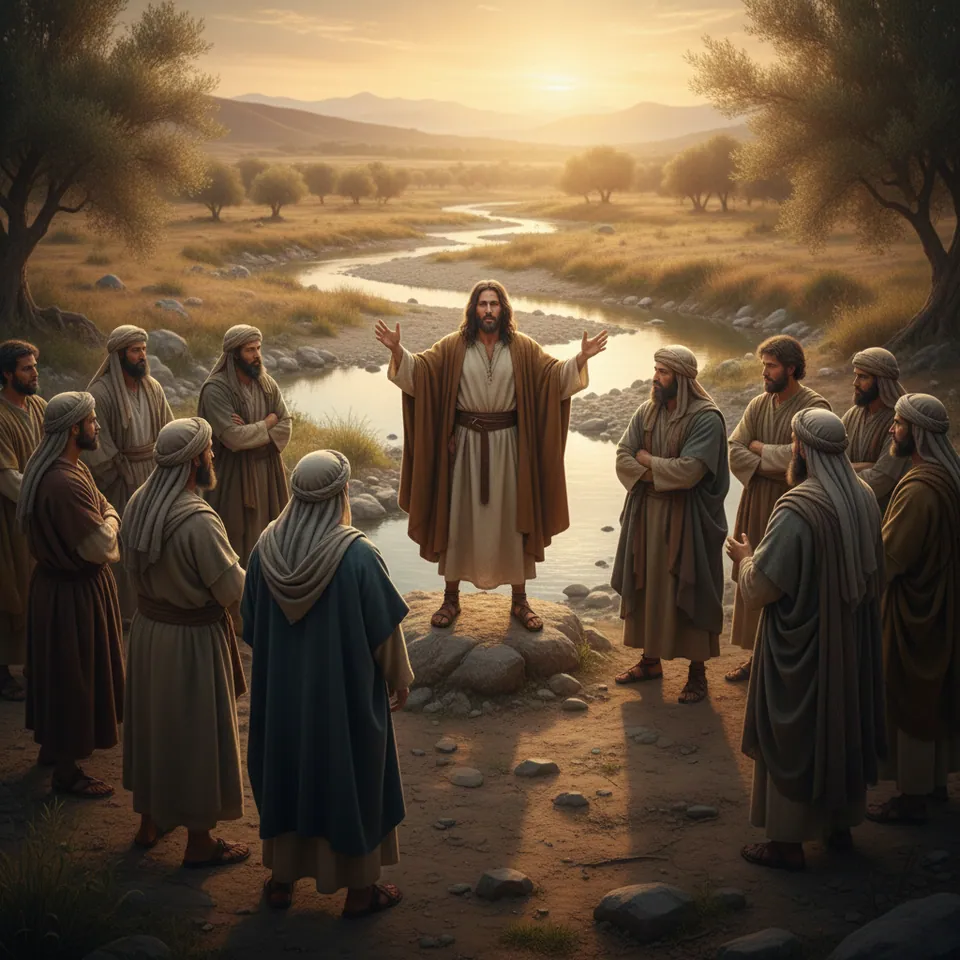
19 Now this was John’s testimony when the Jewish leaders in Jerusalem sent priests and Levites to ask him who he was.
20 He did not fail to confess, but confessed freely, “I am not the Messiah.”
21 They asked him, “Then who are you? Are you Elijah?” He said, “I am not.” “Are you the Prophet?” He answered, “No.”
22 Finally they said, “Who are you? Give us an answer to take back to those who sent us. What do you say about yourself?”
23 John replied in the words of Isaiah the prophet, “I am the voice of one calling in the wilderness, ‘Make straight the way for the Lord.’”
24 Now the Pharisees who had been sent
25 questioned him, “Why then do you baptize if you are not the Messiah, nor Elijah, nor the Prophet?”
26 “I baptize with water,” John replied, “but among you stands one you do not know.
27 He is the one who comes after me, the straps of whose sandals I am not worthy to untie.”
28 This all happened at Bethany on the other side of the Jordan, where John was baptizing.
📖 Who Is He?
God is inherently invisible to the human eye. In the Old Testament, it was believed that seeing God directly would lead to death, so holy and overwhelming is His glory. When this God came to earth in human form, the world neither recognized nor welcomed Him. As it is written, “He came to that which was his own, but his own did not receive him” (John 1:11). Since Jesus’ birth, the world has constantly asked, “Who is he?”
This question breeds misunderstanding. Even Jesus’ own family misunderstood him, and that misunderstanding eventually led to persecution. In this confusion, it was perhaps natural that John the Baptist, a man of immense spiritual influence, was mistaken for the Messiah. People harbored the hope that he might be the Christ.
📖 I Am Only a ‘Voice’
With all eyes on him, and in a situation where the era was pushing him to be the Messiah, John the Baptist declared his identity clearly and firmly.
“I am not the Messiah” (John 1:20). “I am the voice of one calling in the wilderness, ‘Make straight the way for the Lord’” (John 1:23).
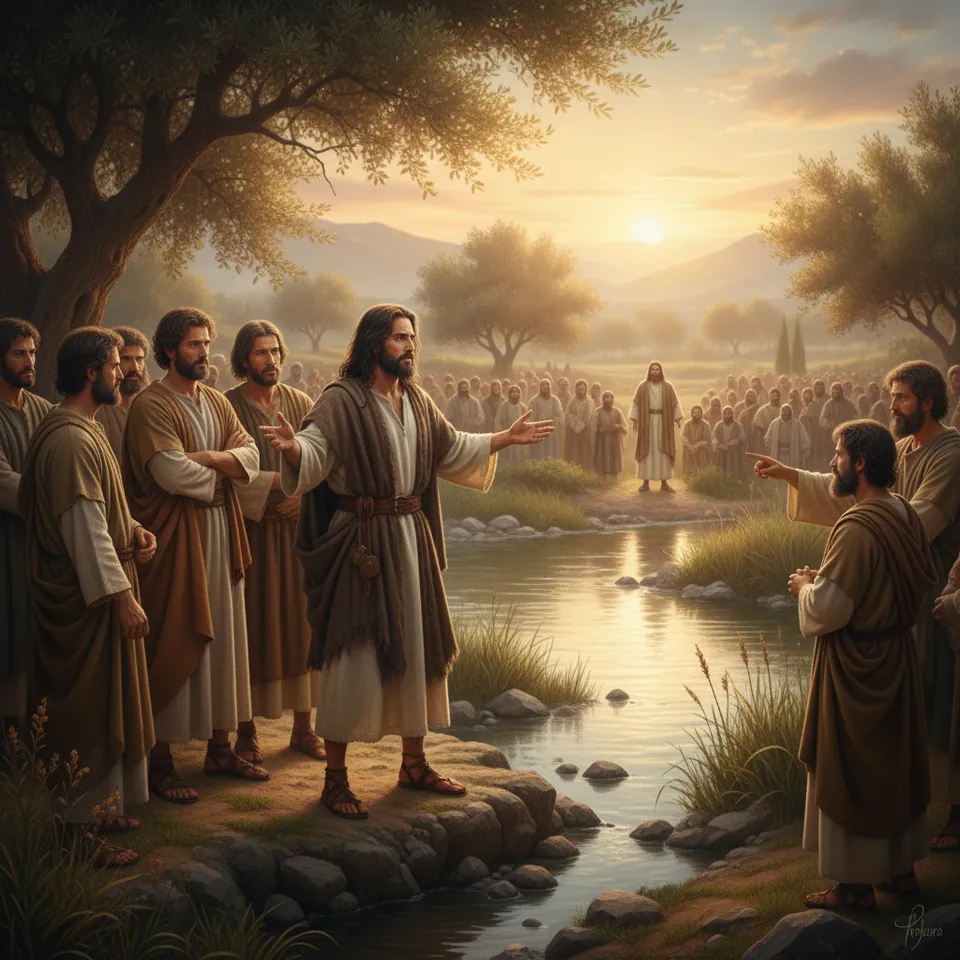
John defines himself as a ‘voice.’ This is a remarkable self-awareness. He says he is not a man with his own message, but merely a ‘voice’ crying out to prepare the way of the Lord. The message is the protagonist, not the voice. It’s like a news anchor who receives the spotlight, but the real star is the news content itself. John thoroughly avoided the spotlight, accurately keeping to his position. Considering that an angel became Satan when he stepped out of his place, John’s steadfastness amidst people’s expectations and praise resonates deeply with us.
📖 The Idol of Our Age: ‘Myself’
We live in a world where we constantly strive to assert our presence. The desire for more attention and recognition—a self-centered life—makes us want the focus to be on us. Perhaps the most powerful idol of our age is ‘myself.’
Regrettably, we often live lives that subtly diminish Jesus Christ in order to build ourselves up. But John considered himself thoroughly a supporting actor, an extra. He confessed, “He must become greater; I must become less” (John 3:30). What is important for a Christian is not ‘how important is the work I do,’ but ‘how honored does Jesus Christ become through the work I do.’ As Paul confessed, our only goal should be that, whether by life or by death, Christ will be exalted in our bodies (Phil. 1:20).
📖 A Life That Lifts Up the Protagonist
Worldly success and Christian success are different. The world says that those who exalt themselves are successful, but the kingdom of God is the exact opposite. John the Baptist constantly lifted up Jesus. “I am not worthy to untie the straps of his sandals.” In turn, the Lord exalted John, saying, “Among those born of women there has not risen anyone greater than John the Baptist.”
No matter how great our work is, it is small before God. What God sees is not how great our work is, but how much Jesus Christ has been exalted through it. When we actively live a life that exalts Christ, we experience the paradoxical truth that God will exalt us.
📖 Christmas, a Day to Proclaim the Protagonist
Christmas is approaching. However, we often forget the true protagonist of Christmas and spend the day as a party just for ourselves. Exchanging gifts, making cards, and having a good time are fine, but they should not become the essence of Christmas. Christmas is a day when we must proclaim Jesus Christ to the world.

As philosopher Byung-Chul Han described in “The Burnout Society,” the world is mired in deep fatigue and despair. If the world could find hope on its own, there would have been no reason for Jesus to come to this earth in human form. We must proclaim that Jesus Christ is the only one who can save humanity from sin and despair. Just as a parent gets down to a child’s eye level to talk, we too must enter the hopeless world and share the news of the gospel at their level. This Christmas should not be a day where I become the protagonist, but a blessed day of becoming a ‘voice’ that cries out to the world about the true protagonist, Jesus.
📖 Audio Summary

💡 Reflection Q&A
Q1. Why did people mistake John the Baptist for the Messiah?
A1. Because of his immense spiritual influence at the time, and because people were eagerly awaiting the Messiah.
Q2. How did John the Baptist define his identity?
A2. He declared that he was not the Christ, but “a voice of one crying in the wilderness, ‘Make straight the way for the Lord.’”
Q3. What is the significance of him calling himself a ‘voice’?
A3. It is a humble confession that he is not the message itself but merely an instrument for delivering it, and that the true protagonist is Jesus Christ whom he proclaims.
Q4. What can be described as the most powerful idol of our age?
A4. The self-centeredness that seeks to elevate and draw attention to ‘oneself’ can be the greatest idol.
Q5. For a Christian, what should be the most important criterion for their work?
A5. Not ‘how important is my work,’ but ‘how honored does Jesus become through my work’ should be the most important criterion.
Q6. Which verse summarizes the attitude of John the Baptist’s life in one sentence?
A6. “He must become greater; I must become less.” (John 3:30)
Q7. How did Jesus evaluate John, who humbled himself and exalted Jesus?
A7. He, in turn, exalted John, calling him “the greatest among those born of women.”
Q8. Why shouldn’t we celebrate Christmas merely as a party among ourselves?
A8. Because the essence of Christmas is not for us to be the protagonists, but to proclaim the protagonist, Jesus, to a world that does not yet know Him.
Q9. Why did Jesus have to come to this earth?
A9. Because the world cannot save itself from sin and despair, and Jesus Christ is the only one who can save humanity.
Q10. What mindset should we have this Christmas?
A10. We should lay down the desire to be the protagonist and adopt the mindset of becoming a ‘voice in the wilderness’ that proclaims the Savior, Jesus, to the world.