Are You Ready to Be a Leader?
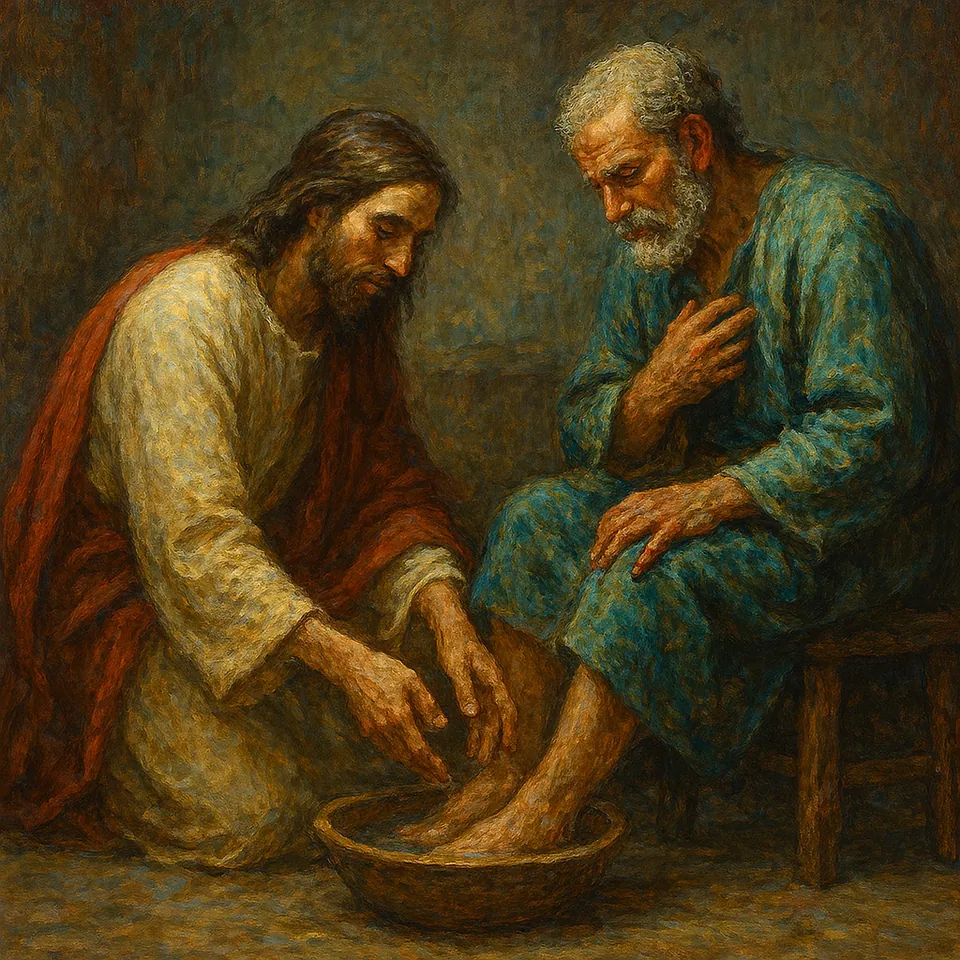
John 13:1–17
1 It was just before the Passover Festival. Jesus knew that the hour had come for him to leave this world and go to the Father. Having loved his own who were in the world, he loved them to the end.
2 The evening meal was in progress, and the devil had already prompted Judas, the son of Simon Iscariot, to betray Jesus.
3 Jesus knew that the Father had put all things under his power, and that he had come from God and was returning to God;
4 so he got up from the meal, took off his outer clothing, and wrapped a towel around his waist.
5 After that, he poured water into a basin and began to wash his disciples’ feet, drying them with the towel that was wrapped around him.
6 He came to Simon Peter, who said to him, “Lord, are you going to wash my feet?”
7 Jesus replied, “You do not realize now what I am doing, but later you will understand.”
8 “No,” said Peter, “you shall never wash my feet.” Jesus answered, “Unless I wash you, you have no part with me.”
9 “Then, Lord,” Simon Peter replied, “not just my feet but my hands and my head as well!”
10 Jesus answered, “Those who have had a bath need only to wash their feet; their whole body is clean. And you are clean, though not every one of you.”
11 For he knew who was going to betray him, and that was why he said not everyone was clean.
12 When he had finished washing their feet, he put on his clothes and returned to his place. “Do you understand what I have done for you?” he asked them.
13 “You call me ‘Teacher’ and ‘Lord,’ and rightly so, for that is what I am.
14 Now that I, your Lord and Teacher, have washed your feet, you also should wash one another’s feet.
15 I have set you an example that you should do as I have done for you.
16 Very truly I tell you, no servant is greater than his master, nor is a messenger greater than the one who sent him.
17 Now that you know these things, you will be blessed if you do them.”
📖 The Passover Meal and Foot Washing
At the Last Supper, the disciples looked for someone to wash their feet.
In those days, people wore sandals on dusty roads, and servants customarily washed the guests’ feet.
But Jesus took off His outer garment, tied a towel around His waist, and began to wash His disciples’ feet.
- Washing feet was the task of the lowest servant.
- Yet the Lord Himself performed this humble act.
Peter resisted strongly.
It seemed unthinkable that the Teacher would wash the feet of His disciples.
But Jesus said:
“Unless I wash you, you have no part with me.” (John 13:8)
📖 A Shocking Act of a Servant
Jesus’ foot washing was not simply an act of service but carried a message of salvation.
- Cleansing of sin: Washing feet symbolized cleansing humanity’s sin.
- Humility: He laid aside divine glory, took the form of a servant, and revealed the humility of the cross.
- Came as a servant: From the beginning, Jesus came in the form of a servant and lived as one.
Philippians 2:7–8 explains:
“He made himself nothing by taking the very nature of a servant, being made in human likeness… He humbled himself by becoming obedient to death—even death on a cross!”
📖 Resistance to the World’s Power Structures
Human nature desires to be served and seeks power, but power is often abused and leads to corruption.
- Jesus rejected the devil’s temptation of worldly power.
- After the feeding of the five thousand, He refused to be made king.
- Instead of power struggles, He chose the wilderness.
True leadership is not about power but about being a servant.
📖 The Example and Practice of Service
Jesus said:
“Now that I, your Lord and Teacher, have washed your feet, you also should wash one another’s feet.” (John 13:14)
- Meaning of office: Church offices are not ranks but functional roles of service.
- Elder: one who leads by example, a role model of faith.
- Deacon: one who serves at the table.
- Attitude of a servant: A church ruled by hierarchy and privilege is already corrupt.
- True service: Pride must die at the cross; the safest place is at the foot of the cross.
- Motivation of love: Jesus even washed Judas’ feet, showing that service must not discriminate.
📖 Discipleship as Towel-Men
Jesus was not a “superman” but a towel-man.
He tied a towel around His waist and washed dirty feet—the image of a servant.
- Our goal is not to be glamorous superstars but towel-men.
- Service is not performance but identity.
- Jesus showed service not only in words but through the cross.
“I have set you an example that you should do as I have done for you.” (John 13:15)
“Now that you know these things, you will be blessed if you do them.” (John 13:17)
Service involves sacrifice, but serving is itself a blessing, and the more we serve, the brighter we shine.
📖 The Lord Who Loved to the End
John 13:1 says:
“Having loved his own who were in the world, he loved them to the end.”
- The Lord’s love does not yield to evil.
- Nothing can stop His love.
- If we choose whom to serve, we will serve no one.
💡 Reflection Q&A
Q1. Why did Jesus wash His disciples’ feet?
A1. To show by example the way of salvation and service from the position of a servant.
Q2. Why did Peter refuse the washing?
A2. Because it seemed against the order and custom for a teacher to wash a disciple’s feet.
Q3. What is the essence of church leadership today?
A3. Deacons and elders must serve as servants, modeling faith for the congregation.
Q4. Where does true service come from?
A4. It begins at the cross, through humility and sacrifice that build the community.
Q5. Why is “knowing and doing” important?
A5. Because knowledge alone is insufficient; blessing comes when we act in service.